Critical Illness Insurance: Is It Worth It in 2026?
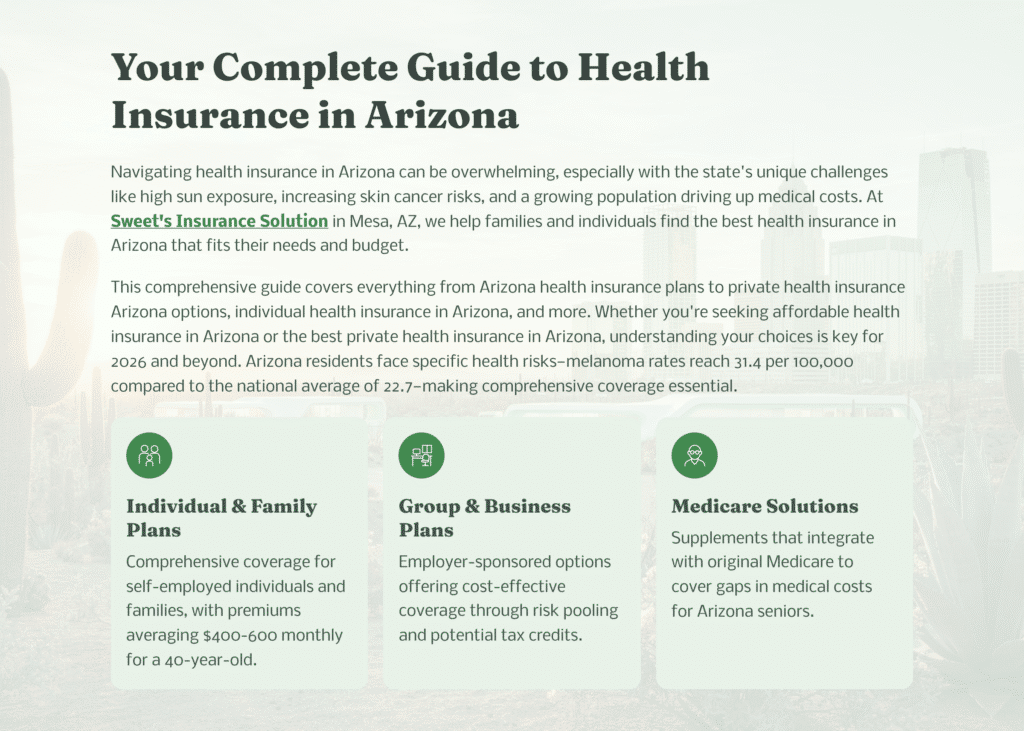
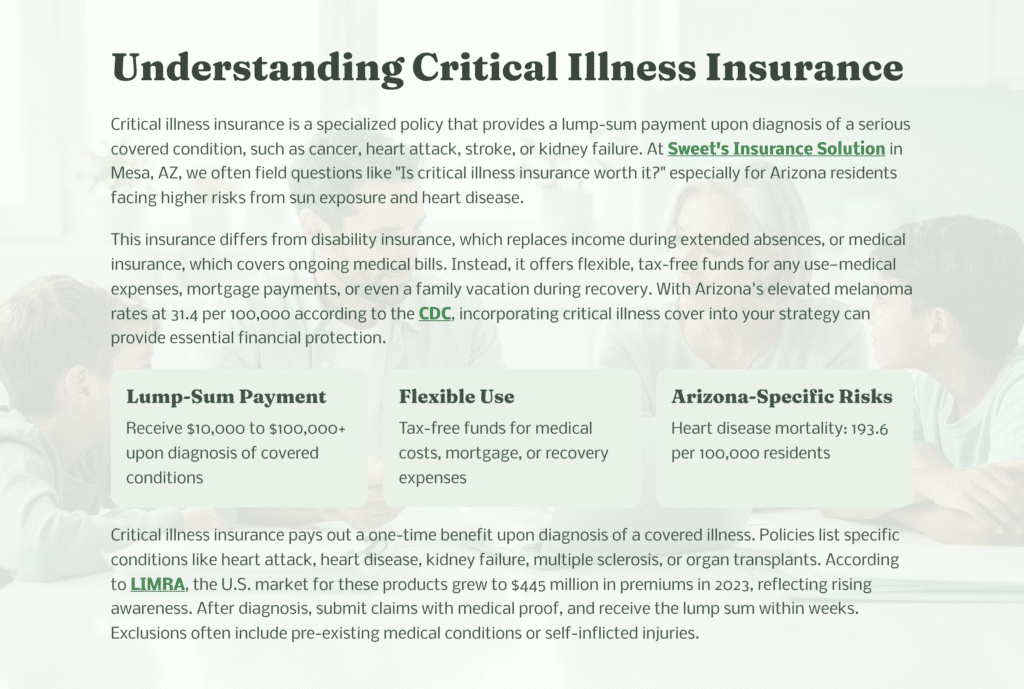
Critical Illness Insurance: Is It Worth It in 2026? Introduction to Critical Illness Insurance What is critical illness insurance? It’s a specialized policy that provides a lump-sum payment upon diagnosis of a serious covered condition, such as cancer, heart attack, stroke, or kidney failure. At Sweet’s Insurance Solution in Mesa, AZ, we often field questions like “Is critical illness insurance worth it?” especially for Arizona residents facing higher risks from sun exposure and heart disease. This complete guide delves into critical illness insurance, its benefits, costs, and whether it’s a smart addition to your insurance plan in 2026. We’ll cover critical illness coverage, pros and cons, and how it complements health insurance or life insurance, helping you decide if critical illness insurance is it worth it for your family. Critical illness insurance differs from disability insurance, which replaces income during extended absences, or medical insurance, which covers ongoing medical bills. Instead, it offers flexible, tax-free funds for any use—medical expenses, mortgage payments, or even a family vacation during recovery. With Arizona’s elevated melanoma rates (31.4 per 100,000, per CDC), incorporating critical illness cover into your strategy can provide essential financial protection. What Is Critical Illness Insurance, and How Does It Work? Critical illness insurance pays out a one-time benefit upon diagnosis of a covered illness, typically ranging from $10,000 to $100,000 or more. Policies list specific conditions like heart attack, heart disease, kidney failure, multiple sclerosis, or organ transplants. For example, if you’re diagnosed with a heart attack, the critical illness benefit can help offset medical costs not covered by your primary health insurance plan. Standalone critical illness insurance policies offer independence, while riders attach to life insurance for added convenience. According to LIMRA, the U.S. market for these products grew to $445 million in premiums in 2023, reflecting rising awareness. In Arizona, where heart disease mortality is 193.6 per 100,000 , such coverage is particularly relevant. How it works: After diagnosis, submit claims with medical proof, and receive the lump sum within weeks. Exclusions often include pre-existing medical conditions or self-inflicted injuries. Critical illness insurance coverage can include early-stage benefits for partial payouts, enhancing recovery support. Pros and Cons of Critical Illness Insurance Critical illness insurance pros and cons weigh heavily in favor of high-risk individuals. Pros: Provides immediate financial relief for medical bills, lost income, or experimental treatments; tax-free benefits; affordable premiums (often $20-50 monthly for $50,000 coverage). It bridges gaps in supplemental health insurance or hospital indemnity insurance, offering peace of mind against severe illness. Cons: Limited to specified covered critical illnesses—not all conditions qualify; premiums increase with age; potential overlaps with disability insurance or accident insurance. Some wonder, “Is critical illness coverage worth it?” If you have robust savings or comprehensive medical coverage under the Affordable Care Act, it might be redundant. However, for Arizona families with hereditary risks like heart disease, the pros often outweigh the cons. Compare with supplemental insurance: critical illness focuses on lump-sums for diagnoses, while hospital insurance covers daily stays. Aflac Benefit Solutions, for instance, offers wellness incentives alongside critical illness benefits. Is Critical Illness Insurance Worth It? Arizona Insights Is critical illness insurance worth it? In Arizona, yes—environmental factors like intense UV exposure heighten cancer risks, making cancer-inclusive policies essential. The University of Arizona Cancer Center reports 40% higher melanoma rates here. For families, critical illness plan affordability (critical illness insurance cost averages $25-40 monthly) makes it a worthwhile supplement to life insurance. Post-COVID, claims have surged for conditions like multiple sclerosis or organ failure, per industry data. If your emergency fund covers less than 6-12 months’ expenses, is critical illness insurance worth it to avoid debt from medical expenses averaging $150,000 for cancer treatments? For the self-employed in Mesa or Cornville, it safeguards income without the underwriting hassles of disability insurance. Pair with dental insurance or hospital indemnity insurance for full-spectrum protection. Best Critical Illness Insurance Plans and Companies Finding the best critical illness insurance involves comparing insurance companies like Aflac, MetLife, and Guardian. Aflac’s critical illness policy offers up to $25,000 with wellness benefits, praised for fast claims . Continental American Insurance Company provides group options with min_retweets-worthy reliability. Use NAIC complaint indexes for evaluations—low scores indicate strong customer service. Critical illness insurance plans vary: Standalone for flexibility, riders for cost savings (10-20% less). In Arizona, prioritize plans covering heart attack and kidney failure, common local issues. Critical illness insurance compare: MetLife suits families with broad covered conditions; Guardian emphasizes quick payouts (92%+ rate). Critical Illness Insurance Cost and Coverage Options Critical illness insurance cost depends on age, health, and benefit amount. For a 40-year-old non-smoker in Arizona, expect $15-30 monthly for $25,000 coverage. Smokers or those with family histories pay more. Supplemental coverage, like cancer insurance riders, adds $5-10. Coverage options: Early-stage for 10-25% partial benefits; family plans extending to dependents at 50%. Compare with medical insurance—critical illness targets lump sums, not ongoing bills. Under the Affordable Care Act, it supplements high-deductible plans effectively. Standalone vs. Riders: Which Critical Illness Policy to Choose? Standalone critical illness insurance cover offers broader conditions and portability, ideal for switching jobs. Riders attach to life insurance policies, which are cheaper but lapse with the base policy. PolicyAdvisor notes standalone suits higher risks. In Arizona, a standalone allows provider flexibility amid state regulations. For small businesses, group critical illness plans via employers reduce costs without underwriting. Common Misconceptions and Mistakes to Avoid Many assume health insurance covers all illness costs, but it misses non-medical expenses. Overlooking covered illnesses leads to gaps—verify lists, including severe illnesses like multiple sclerosis. Relying on employer plans ignores portability; adjust for inflation with escalation riders. Myth: Critical illness is unnecessary with savings. Reality: Unexpected medical conditions drain funds quickly. Alternatives to Critical Illness Insurance If critical illness doesn’t fit, consider disability insurance for income replacement or supplemental health insurance like accident insurance. Hospital indemnity insurance pays per diem for stays; critical care insurance focuses on ICU scenarios. HSAs offer tax perks for medical savings under high-deductible